Kyoji Nagatani
Interview by Giulia Leonelli
photo Marco Bertoli
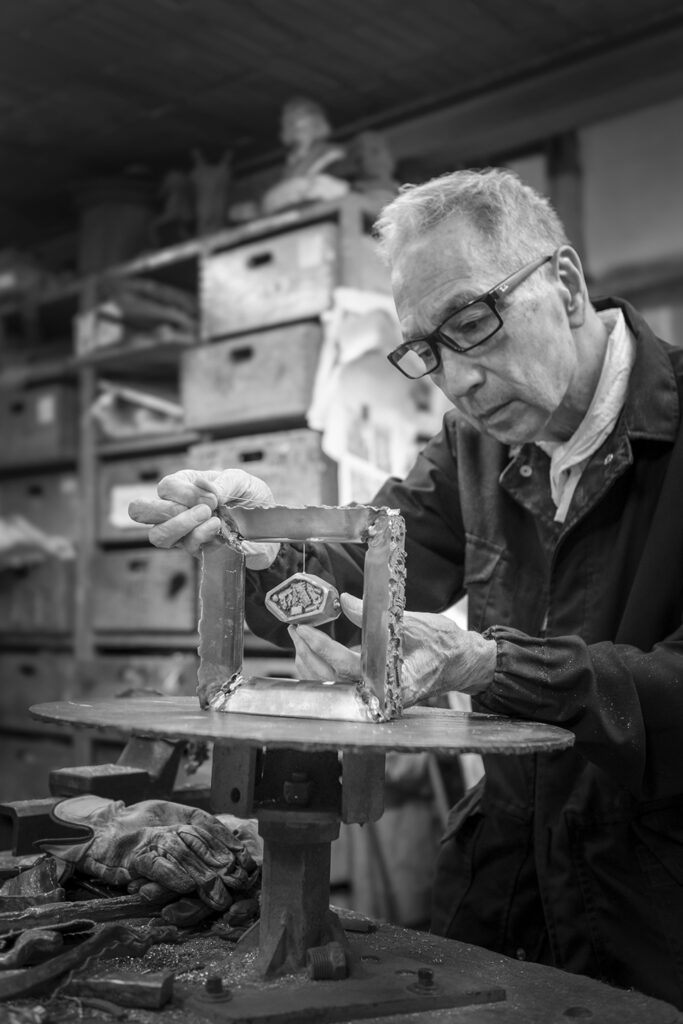
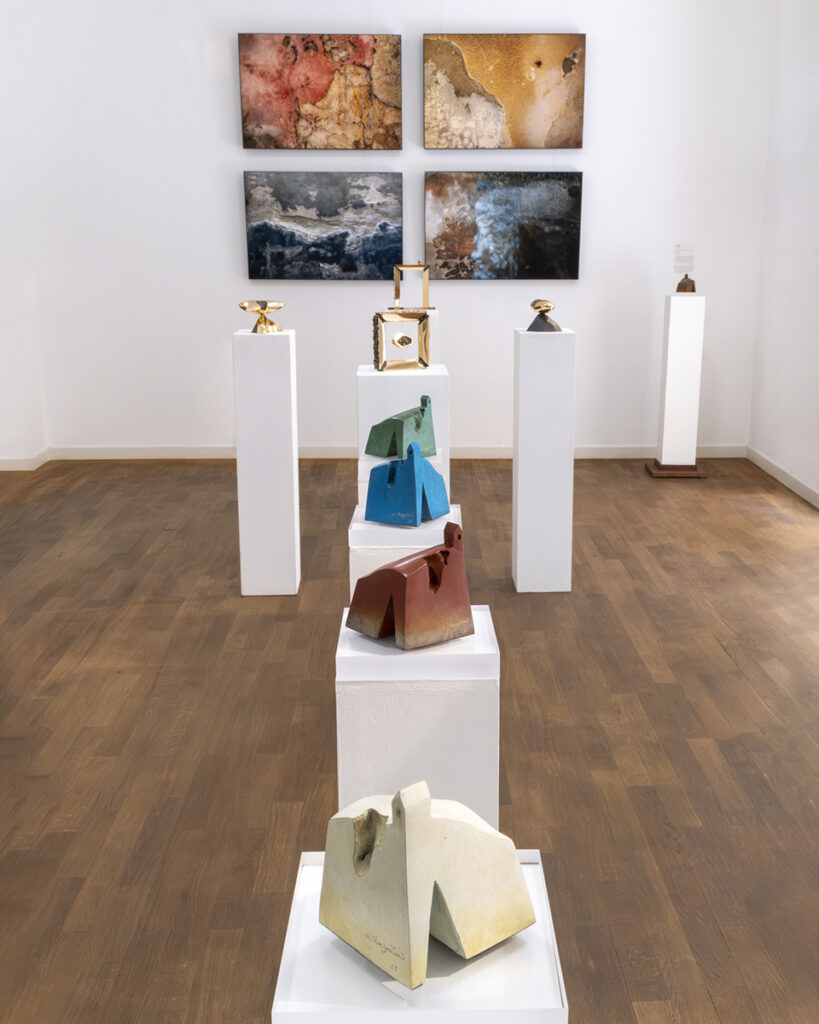
Sculpture is the essence of his creativity. Bronze allows him to follow tradition and innovation at the same time. His name is Kyoji Nagatani. He was born in Japan where he grew up surrounded by art and moved to Italy for his studies. He believes simplicity is the key to engage all five senses and his life commitment is to express truth through sculpture.
You were born in Japan, but then you decided to build your future in Italy as a student. Why did you choose Italy?
KN. My first trip to Italy was fifty years ago. In high school, used to create plaster casts of statues and I can still recall the feeling of looking at the original marble and bronze statues in Florence and Rome. I studied sculpture at university and later I had the opportunity to delve into the art of bronze casting during my postgraduate course. It was then that my professor introduced me to the rich history of bronze sculpture in Italy: from that moment, I developed my desire to study this tradition as well as Italian culture in depth. I was also greatly influenced by the Exhibition of Contemporary Italian Sculpture that took place in Japan in the 1970s.
As you began to imagine your future in the artistic field, why did you choose sculpture? Your father was known as a painter, did his art influence your vision in a way? Were you exposed to art from a very early age because of your father?
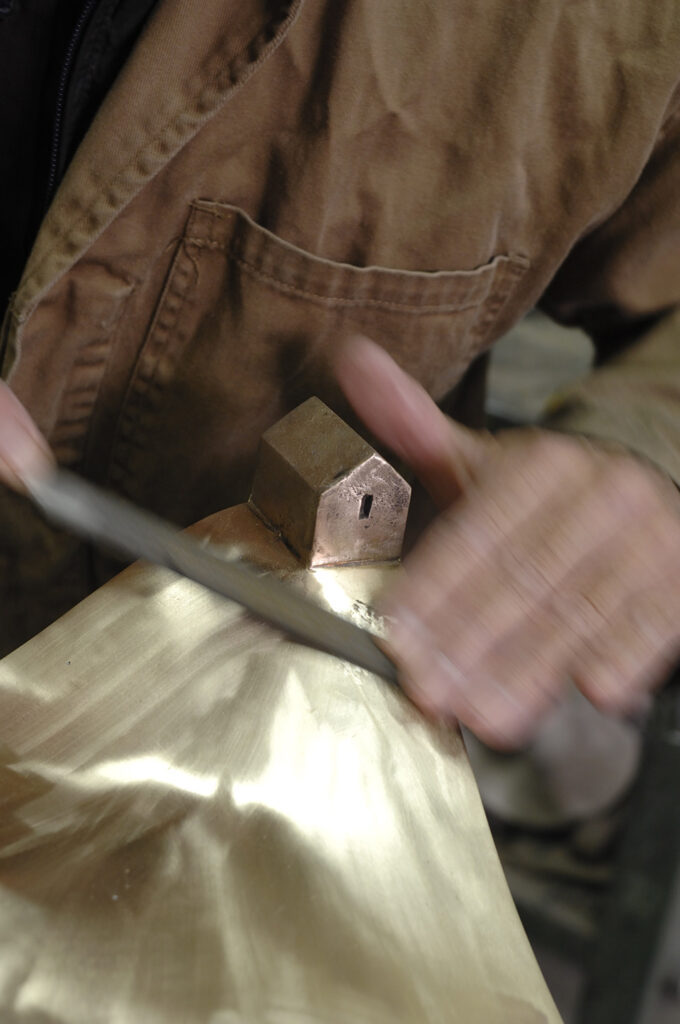
KN. My father’s life was strictly connected to art in an educational setting. During my childhood, his atelier was my home and I grew up among paper and colours. In his work environment, I had the chance to closely observe activities like nailing, sawing and gluing. Without even realising it, I later began to develop a great interest in handwork. Although my father was a painter, he also mastered handcraft techniques, ceramics and woodworking. This made me discover the joy of exploring with different materials. He never tried to influence my choices about what I should pursue in my artistic path, whereas in high school – inspired by my brother who was studying to become a designer – I developed an interest in watercolour and graphic design. Nevertheless, when I showed my drawings to my professor of fine arts at university, he told me I actually had more aptitude for three-dimensionality than flat surface. That suggestion made me more conscious of sculpture.
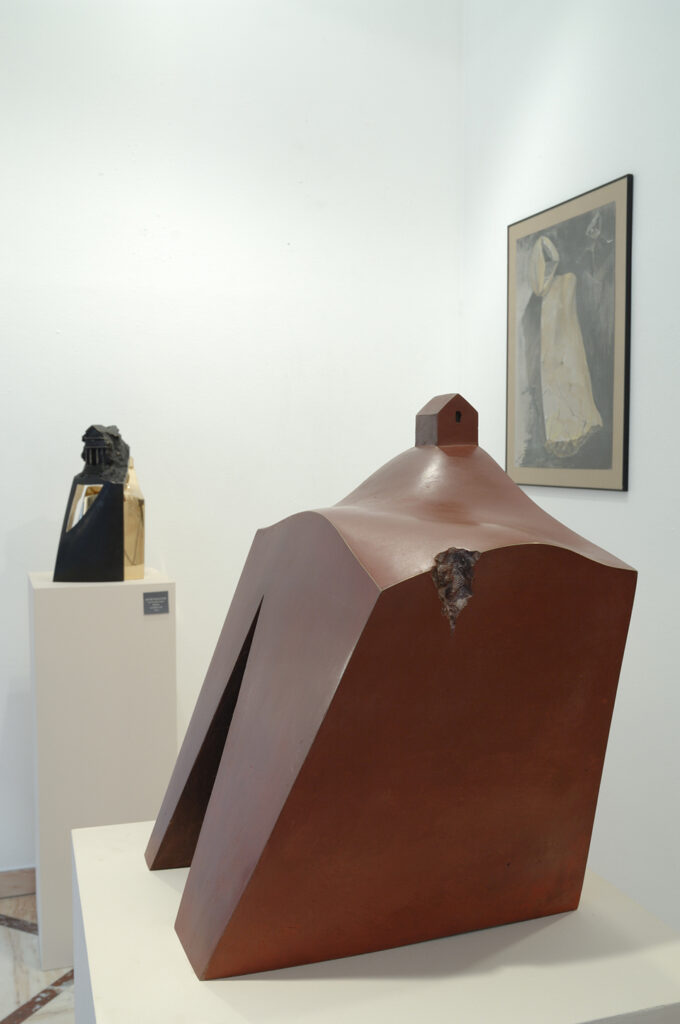
You studied bronze casting, what do you think are the advantages of working with this material? What other materials do you employ in your pieces? Also, minimalism is a key word of your artistic soul. Is less actually more?
KN. Bronze conveys a more human expressivity over time than iron, aluminium and brass. Bronze is not as hard as steel; it is neither viscous as aluminium nor dry as brass. As you polish bronze, its brightness almost seems to bewitchingly captivate the eye, then, as the years go by, it loses its brightness and develops a greenish patina. Nonetheless, it keeps holding a noble dignity in its own way: this is the most attractive aspect of bronze. Proceeding to remove the excess does not only affect the overall appearance of the statue, but also the observer’s attitude. I do not intend to deny the value of decoration, but sometimes decorative additions may lead to the loss of the essence. The more the simplicity, the more you can engage all the five senses.
Can you name a few artists that inspired you? Is there something in particular that inspires you?
KN. When I was a student at university, I was deeply fascinated by the works of art by Manzù, Pomodoro and Marini. I had no idea that, after my study period in Italy, I would get to meet these great masters in real life. As for the artists that influenced my vision regardless of their nationality, I learned the essence of abstract sculpture from Brâncuși, the poetic power of matter from Manzù, the urban sense and rationality from Pomodoro, the strict and sincere way of committing to the work from Vangi.
What is the message that you want to convey with your art?
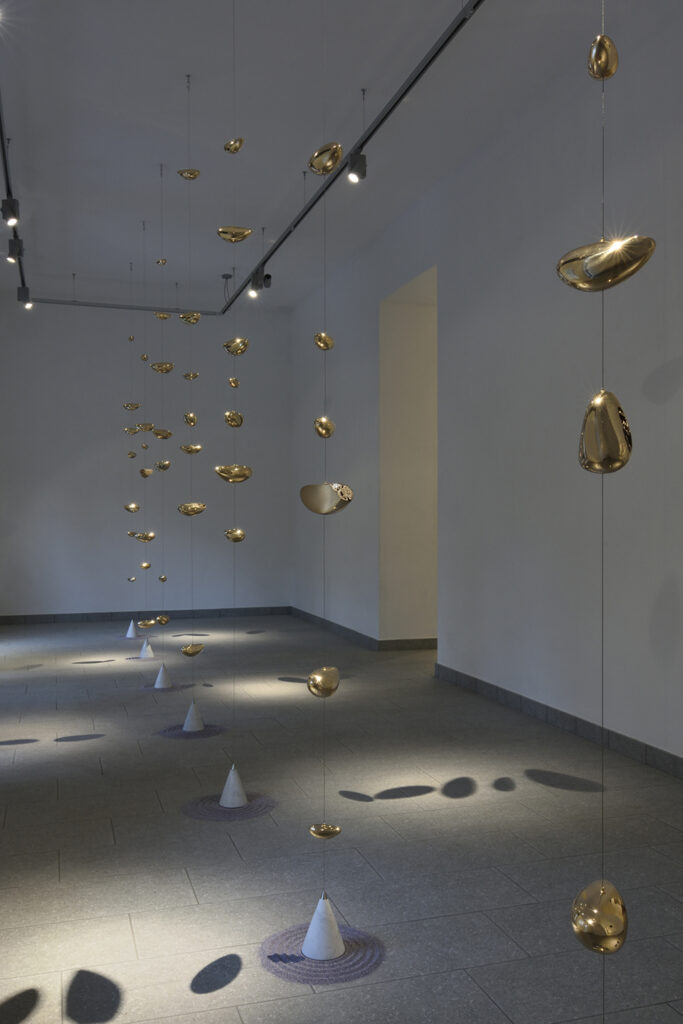
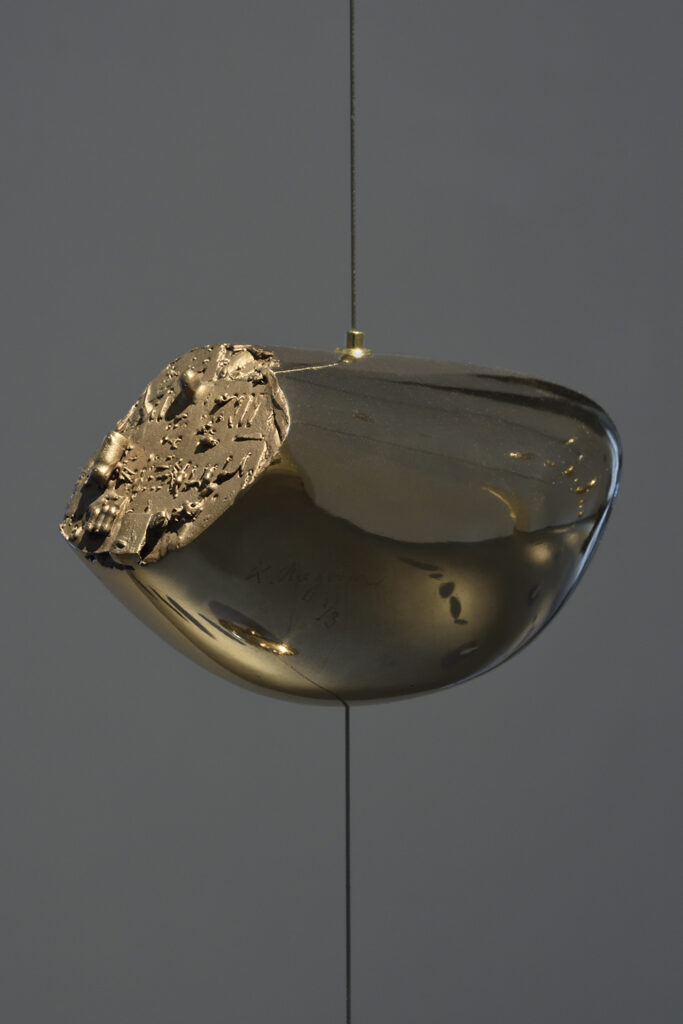
KN. The meaning of art is something that even today I cannot fully explain. However, I feel that crafting items allows the human being to develop a sensibility which might be able to control their more primal instincts, even if partially. Respect, love, patience and humility lie in creativity, and these are fundamental to human beings, the same concept conveyed by my sculpture called “Le pietre oniriche” (“Dreamlike stones”). The oval shapes are inspired by the emblem of life. They are just like rock fragments that come off the mountain and fall into the rivers. At the beginning, they are sharp, but then, during the journey that leads them to the coast, they become smoother, round- shaped, softer and modelled in generous shapes because of the force of nature and the flow of time. It is the exact same path that symbolises the life of each person. Young People have fresh minds, which are also raw and sharp. They are aware of the reality that surrounds them and, thanks to the passing of time, their temper becomes softer, more understanding and wiser. In this sculpture, seven shapes are hanging from a vertical cable that stands for tension and social order. The seven shapes symbolise the seven Virtues: affection, bravery, generosity, honesty, patience, humility and respect.
If only we practiced one of these virtues every day of the week, our society would be made up of wiser men.
In your exhibitions, genesis and time were some of the most important themes. What brings you to focus on these?
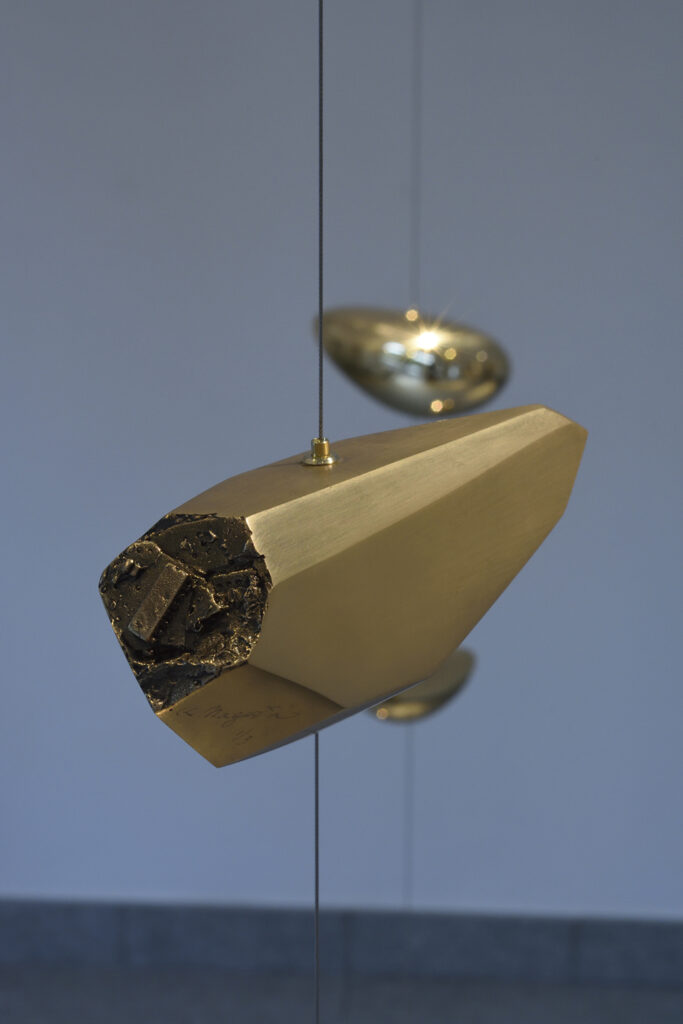
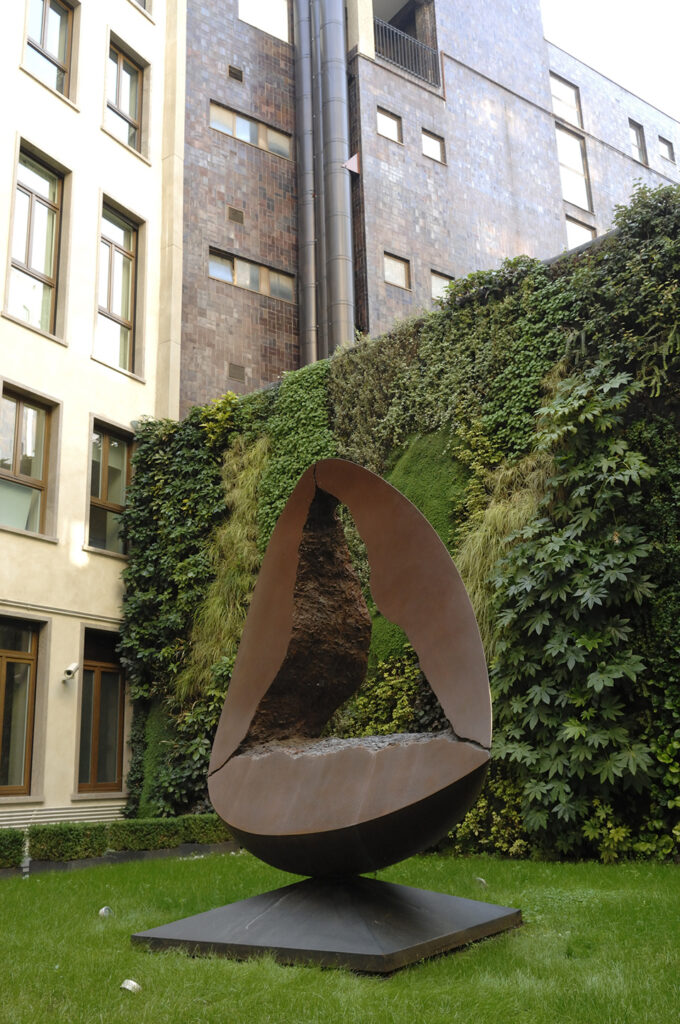
KN. The title “Genesi” (“Genesis”) comes from a very instinctive question: where are we from and where are we going? I’m deeply fascinated by the Panspermia hypothesis, according to which life has a cosmic origin. It exists because of several miracles in the middle of a greater miracle which is the universe, and this never ceases to amaze me. For this reason, the word “seed” naturally appears in my sculptures’ titles. One of my work of arts called “Fossile contemporaneo” (“Contemporary Fossil”) represents the idea that as we learn from dinosaurs’ bones from millions of years ago, in the same exact way, a future humanity might find microchips from our time as fossils, bonding us to the next civilisation: a thought that crosses time and space.
What is the creative process behind your kind of work?
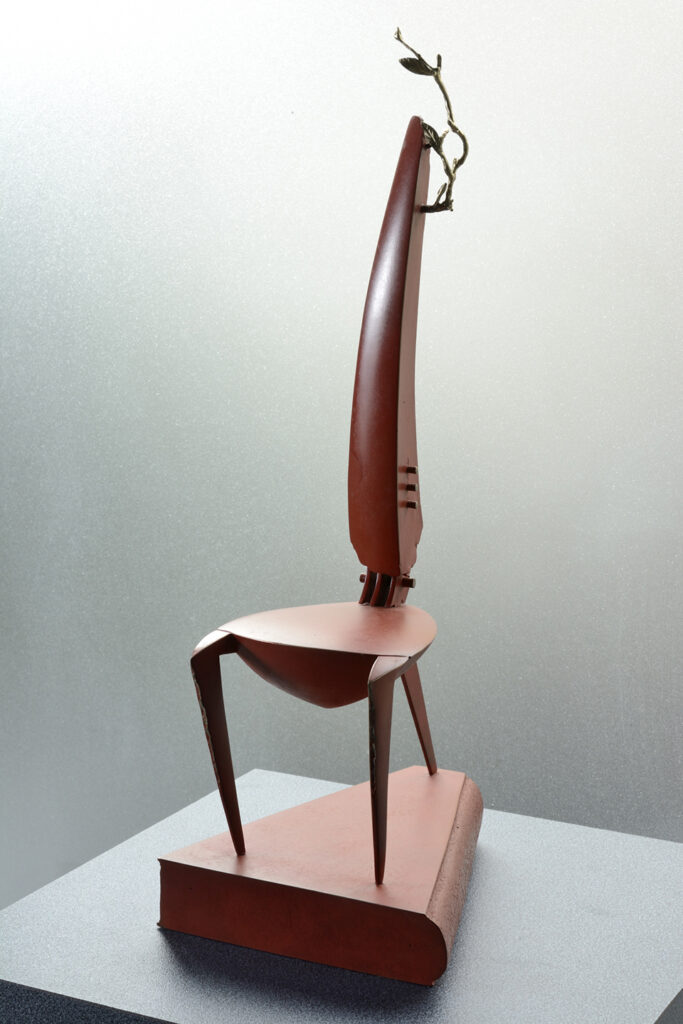
KN. At the foundation of my art there is my way of living. What I see every day, what I listen to, everything I touch or I try during my journeys: everything comes together over the years as layers
of a pearl and becomes the source of my formal imagination.
Do you have a professional dream that you would like to achieve?
KN. My dream is being able to investigate the truth through sculpture, even the one that escapes the eyes.